Mechanical Versus Quartz Watch Guide for Buyers
A watch can have a ceramic bezel, sapphire crystal and serious wrist presence, yet the movement decides how it lives with you. This mechanical versus quartz watch guide cuts through the badge-driven noise and focuses on the part you cannot judge from a wrist shot: the engine behind the dial.
The right choice is not automatically the more expensive one. It depends on whether you want interaction, tradition and a moving seconds hand with character, or zero-fuss precision that is ready whenever you reach for it. Both movements have a place. The mistake is buying the story when your routine needs something else.
Mechanical versus quartz watch guide: the real difference
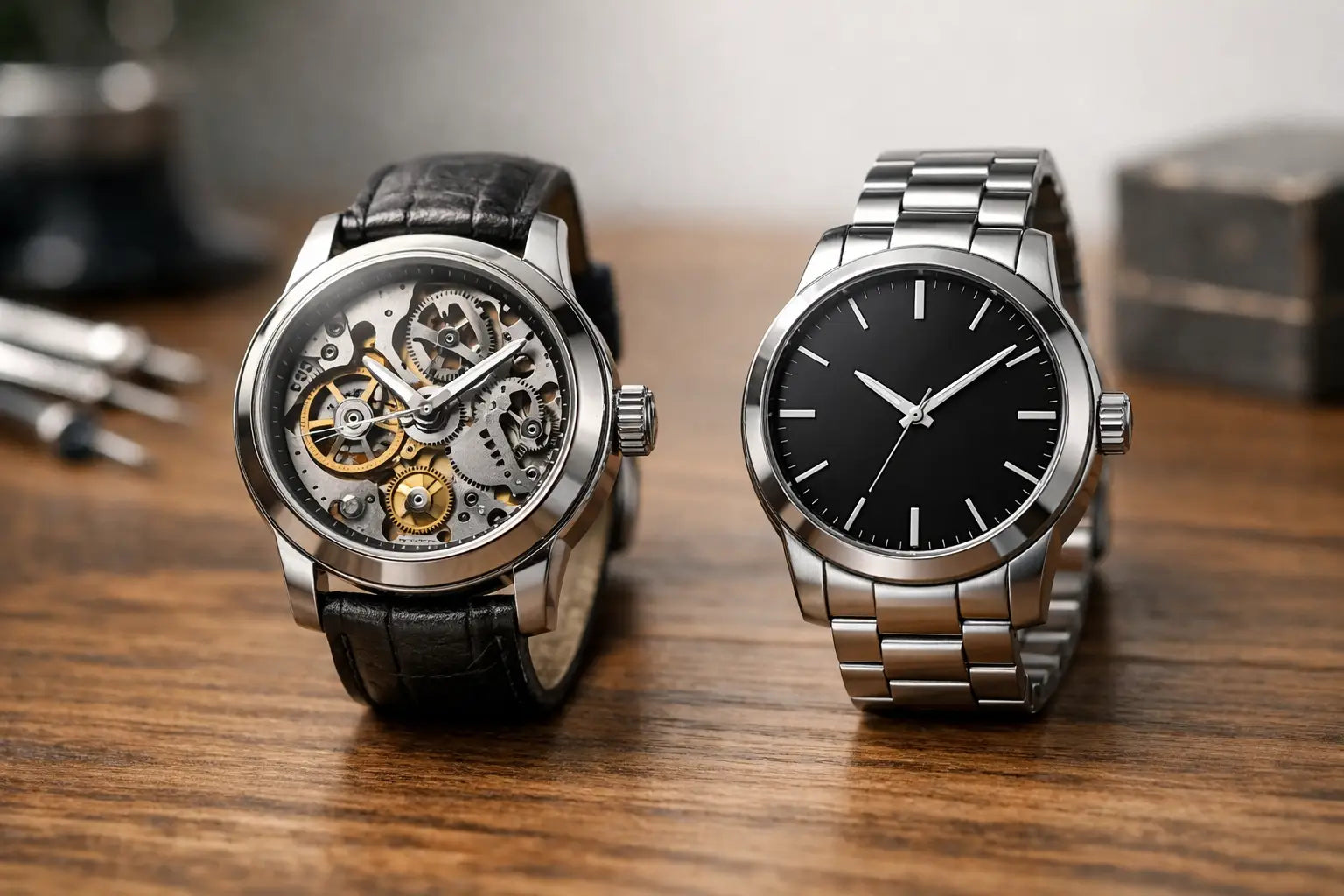
A mechanical watch runs on stored energy. In an automatic model, a weighted rotor turns as your wrist moves, winding the mainspring. In a hand-wound model, you wind the crown yourself. That spring releases energy through a set of gears and an escapement, regulating the movement of the hands.
Quartz uses a battery to send electricity through a tiny quartz crystal. The crystal vibrates at a highly consistent frequency, and the circuit converts those vibrations into one-second pulses that drive the hands. It is an efficient system with very few moving parts compared with a mechanical calibre.
That difference shapes almost everything: accuracy, servicing, thickness, cost, power reserve and the way the watch feels on the wrist. Mechanical is analogue engineering in motion. Quartz is controlled precision without ceremony.
Accuracy: quartz wins without a fight
For timekeeping alone, quartz is the clear winner. A standard quartz watch may gain or lose around 15 seconds per month. A well-regulated mechanical watch can perform impressively, but it may still vary by several seconds each day. Position, temperature, magnetism and how fully the mainspring is wound can all affect it.
That does not make mechanical inferior. It makes it different. A mechanical movement is a compact machine of springs, jewels, levers and wheels working continuously inside a case barely wider than your palm. Its small variation is part of the bargain.
If you regularly time meetings, trains, workouts or travel connections, quartz gives you confidence with no adjustment ritual. If your watch is an object you enjoy setting, observing and wearing with intention, mechanical accuracy is usually more than enough. Most owners reset a mechanical piece occasionally and get on with their day.
The feel on the wrist and under the loupe
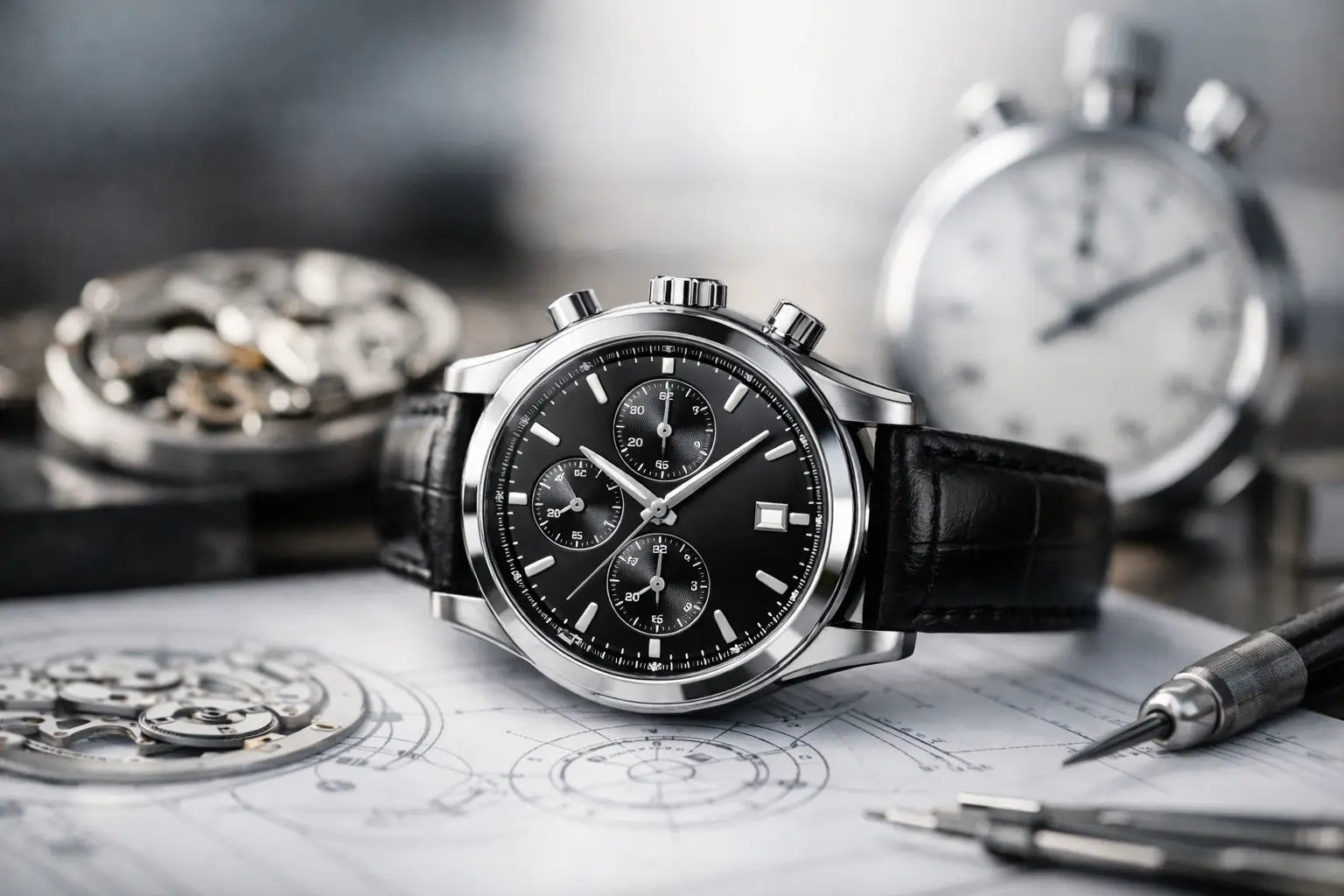
A seconds hand is the easiest visible clue. Quartz usually ticks once per second. Mechanical seconds hands appear to sweep, although they actually move in several small beats per second. On a chronograph, the action can be even more revealing: a mechanical mechanism has a physical, layered feel, while quartz often prioritises clean, exact functionality.
There is also a difference you notice rather than see. An automatic watch may have a subtle rotor movement when you pick it up. A hand-wound piece asks you to engage with the crown. That daily connection is precisely why many watch buyers prefer mechanical, even knowing it is less accurate.
Quartz should not be dismissed as soulless. A slim quartz watch can sit sharply beneath a cuff, remain lighter on the wrist and offer a clean dial layout without the extra height demanded by a mechanical movement. For a bold sports-watch silhouette, mechanical heft can feel right. For a refined everyday piece, quartz restraint can be the stronger move.
Ownership: what each movement asks of you
Mechanical watches require more attention, but not constant maintenance. Wear an automatic regularly and it should stay wound through normal movement. Leave it in a drawer beyond its power reserve - commonly around 38 to 72 hours, though some movements run longer - and it will stop. You will need to wind and set it before wearing it again.
A hand-wound watch needs winding daily or every couple of days, depending on its reserve. For some, that is a pleasure. For others, it becomes the reason the watch stays unworn.
Quartz is simpler. Fit it, set it and wear it. The battery generally lasts one to three years. When it runs down, replace it promptly. An exhausted battery left inside a watch can leak and damage the movement, turning a minor job into an avoidable repair.
Mechanical servicing is the bigger long-term commitment. Lubricants age, seals degrade and moving components eventually need inspection. Service intervals vary widely according to the movement, water exposure and how the watch is used, but a mechanical piece should be treated as a machine, not a sealed ornament. A proper service costs more than a battery replacement because a technician is disassembling, cleaning, lubricating, regulating and testing a complex mechanism.
Durability is more nuanced than the marketing
Quartz movements are generally better suited to neglect, daily knocks and grab-and-go ownership. Their lower part count gives them an advantage, and a battery-powered watch can take a break in a drawer without losing its settings.
Mechanical watches can be extremely durable when built and handled properly, but they have more to protect. A hard impact can affect the balance assembly or dislodge a component. Magnetism can interfere with performance, although modern anti-magnetic materials have improved matters. Water resistance also depends on case construction and seals, not simply whether the movement is quartz or mechanical.
If you want one watch for the gym, commute, holidays and unpredictable weekends, quartz is the lower-maintenance answer. If you want a watch that rewards ownership over years, mechanical offers the more involved experience. Neither route excuses careless use: rinse a watch after salt water, ensure the crown is secured, and do not operate chronograph pushers underwater unless the watch is specifically designed for it.
Value is not the same as price
Mechanical movements carry more labour, adjustment and engineering complexity. That helps explain their higher price, especially when a movement is finished, decorated or designed in-house. But a higher mechanical price does not guarantee superior performance for your life. It may simply buy a more elaborate machine.
Quartz can deliver extraordinary value. You get exceptional precision, lower maintenance costs and often a slimmer case for less money. It is the rational choice if the design, materials and reliability matter more to you than the movement story.
Mechanical value is emotional as well as technical. The appeal lies in the fact that the watch is alive only when it is powered, adjusted and worn. It has an audible beat, a visible rhythm and a mechanical logic that has survived every digital alternative. For many collectors, that is worth paying for.
Resale is a separate question. Some mechanical watches retain demand better than quartz equivalents, particularly in recognisable sports-watch categories. Yet model desirability, condition, service history, originality and market timing matter far more than a blanket rule. Buy a movement because you will enjoy owning it, not because someone promised it a future premium.
Which one belongs in your rotation?
Choose quartz if you want exact time, easy ownership and a watch that works after weeks off the wrist. It is ideal for a daily wearer, a travel piece, a slim dress watch or anyone who has no interest in winding crowns and booking services.
Choose mechanical if the movement itself is part of the purchase. It suits the buyer who appreciates the sweep of the seconds hand, the weight of an automatic sports watch, the ritual of setting the time and the knowledge that hundreds of tiny parts are working in concert beneath the dial.
A two-watch rotation is often the cleanest answer: quartz for the relentless weekday schedule, mechanical for evenings, weekends and moments when the watch is meant to be noticed. There is no prestige in choosing a complicated movement you never wear, and no compromise in choosing quartz because it suits your life.
Before deciding, ask one blunt question: do you want your watch to disappear into your routine, or do you want it to create a ritual within it? Pick the movement that answers honestly. The best watch is the one that earns wrist time long after the first impression has passed.