Independent Luxury Watch Brands Worth Knowing
A Daytona, Royal Oak or GMT has instant authority. Everyone knows the silhouette before you even turn your wrist. But independent luxury watch brands operate on a different frequency: less borrowed recognition, more technical nerve. They are where collectors go when the obvious choice no longer feels like enough.
The appeal is not simply rarity. Plenty of watches are scarce because nobody wants them. A serious independent earns attention through a recognisable point of view, whether that is an audacious case shape, a movement built from the ground up, a radically clean dial or finishing that exposes exactly how much work went into the object.
For buyers tired of boutique politics, allocation games and price tags inflated by a logo’s global marketing machine, independence can feel like the sharper route. It is not cheap luxury. It is luxury with a reason to exist.
What Makes a Watch Brand Truly Independent?
Independent does not just mean small, unfamiliar or hard to find. In watchmaking, the term usually describes a business with meaningful creative and operational control outside the major luxury groups. The founder, family, watchmaker or closely held team sets the direction. They choose the design language, production pace, movement architecture and distribution strategy.
That freedom matters. A group-owned brand can produce excellent watches, but it often needs to satisfy a broad global brief. An independent can make a watch that is too strange, too labour-intensive or too niche for a boardroom spreadsheet. That is why the category produces both its biggest successes and its most spectacular misfires.
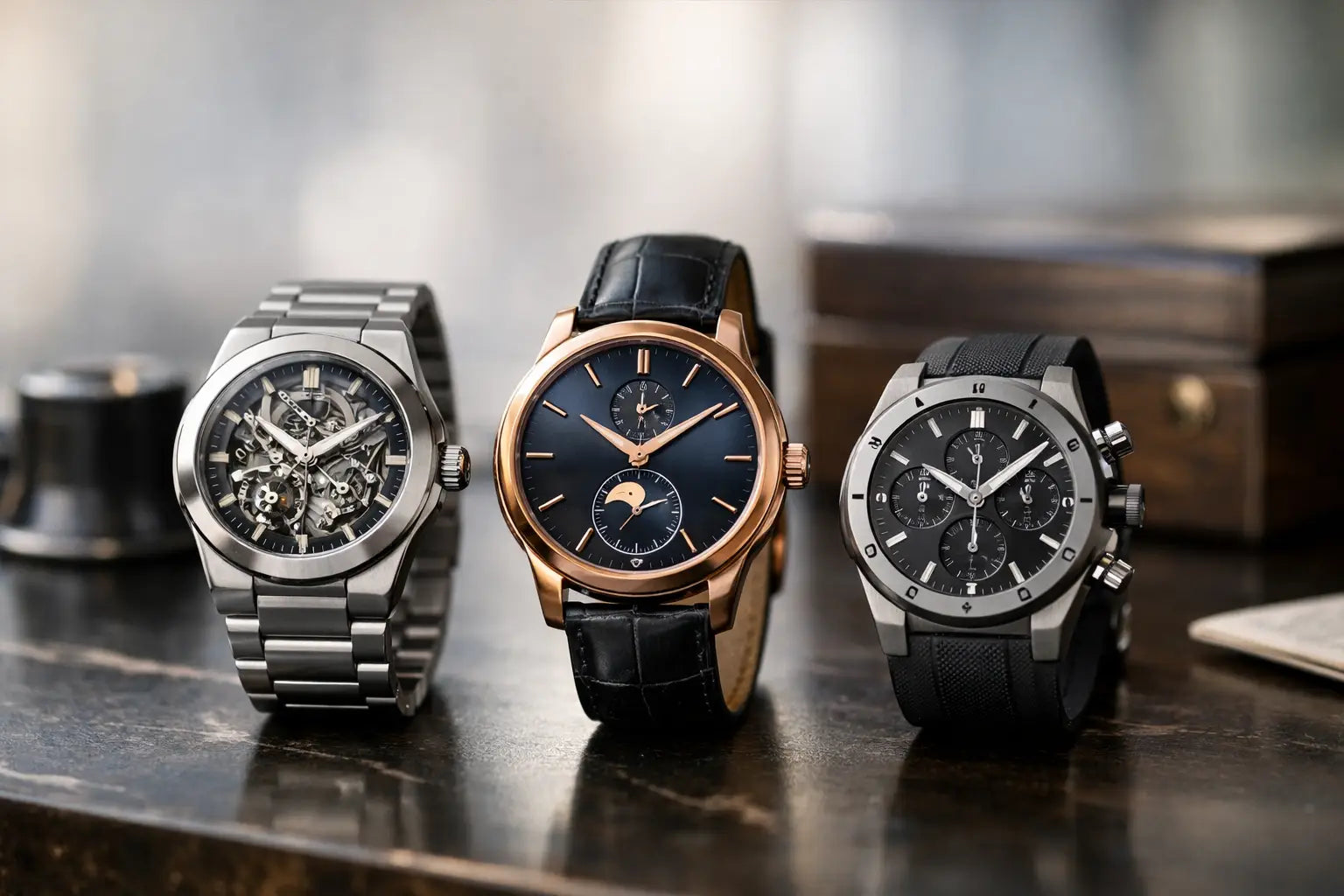
The strongest names have a clear signature. You should be able to spot the philosophy without seeing the badge. For one maker, it may be an exposed balance wheel and three-dimensional architecture. For another, it is a dial almost empty of clutter. For another, it is classical proportions, hand-finishing and restrained precious metal cases. The details differ, but the conviction is obvious.
Why Independent Luxury Watch Brands Matter
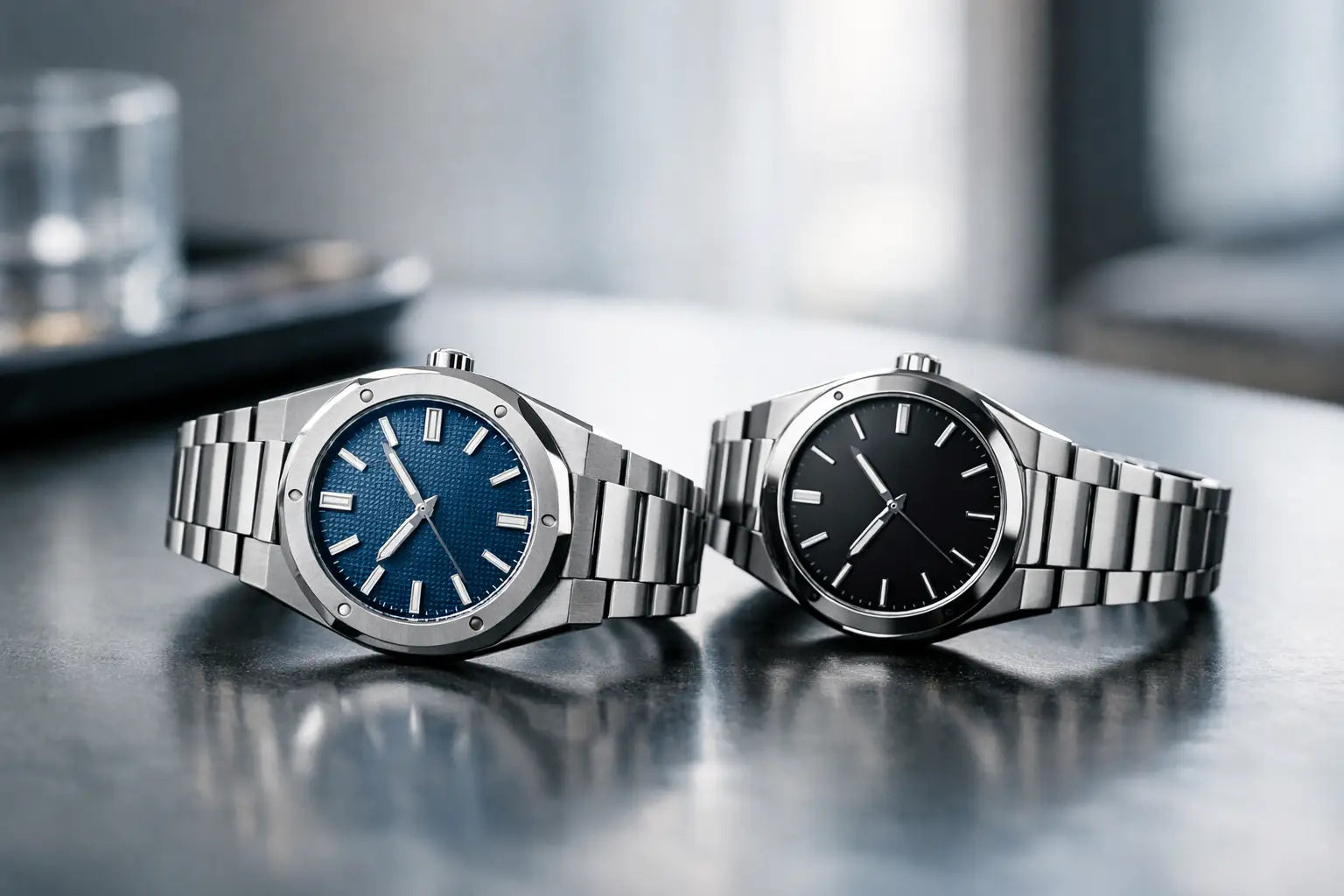
Mainstream luxury is built around familiarity. The proven sports watch formulas work because they are versatile, recognisable and easy to understand. Steel bracelet. Integrated case. Dark dial. Strong bezel. Proven recipe.
Independents are more willing to challenge that recipe. MB&F treats the wristwatch like a machine from an alternate future. F.P. Journe made collectors care deeply about movement material, dial character and uncompromising personal design. H. Moser & Cie can make a minimal dial feel more confrontational than a watch covered in logos. Ressence rethinks how time is displayed altogether, replacing conventional hands with rotating discs.
This is not innovation for the sake of making something weird. At its best, it changes the experience of wearing a watch. You notice the domed crystal, the weight distribution, the way a crown engages, the depth of the dial and the slow mechanical choreography happening beneath it. The watch stops being a generic status object and becomes a conversation between engineering and taste.
There is also a harder commercial reality. Independent production is often limited because it has to be. Small workshops cannot manufacture tens of thousands of cases, dials and movements at the pace of industrial giants. That can create genuine scarcity, rather than the manufactured scarcity used to turn a standard steel watch into a waiting-list trophy.
The Difference Between Real Scarcity and Hype
Not every low-production watch deserves collector status. A limited edition number on a caseback is not proof of quality. Nor is a dramatic launch video, a celebrity wrist shot or a price increase after a few social posts.
Real scarcity starts with capability. Hand-finishing takes time. Developing an in-house calibre takes money, patience and specialist skill. Producing complex cases in unusual materials creates a slower process and a higher rejection rate. When a maker is genuinely constrained by craft, the limited output has substance behind it.
Hype, by contrast, usually relies on urgency without depth. If the only message is that you must buy now because everyone else wants one, take a step back. Look at the watch itself. Is the design coherent? Does the movement have a story beyond a generic specification? Is the finishing visible where it counts? Would you still want it if nobody recognised the name?
That final question separates a collector purchase from a social-media purchase. Both can be enjoyable, but they are not the same thing.
What to Look for Before You Buy
An independent watch should earn its price through more than exclusivity. Start with the maker’s design language. A strong brand does not need to repeat the same watch endlessly, but its models should feel related. The case proportions, typography, hands, movement layout and finishing should point to a deliberate identity.
Then examine the movement. “In-house” is useful shorthand, but it is not automatically better. An independently designed movement can be extraordinary, while a respected supplied calibre can be the sensible choice for reliability, servicing and cost control. What matters is whether the movement suits the watch and whether the brand is honest about its origin.
Finishing deserves a close look too. Sharp inward angles, clean bevels, polished countersinks, even graining and disciplined dial printing are not empty details. They reveal the maker’s standards. Under a loupe, the difference between expensive decoration and serious handwork becomes clearer fast.
Finally, consider ownership after the first rush. A watch with a rare calibre or unconventional display may need specialist servicing. A small brand may have a much shorter service network than an established Swiss powerhouse. That is a trade-off, not a reason to avoid the category. Buy with your eyes open, and make sure the maker has a credible plan for parts, repairs and long-term support.
Wearability Still Wins
Collectors can become so focused on movement photographs and production numbers that they forget the simplest test: does it work on the wrist? A 42 mm case can wear compactly or dominate your sleeve depending on lug length, thickness and bracelet design. A highly polished precious-metal watch may look exceptional in private but feel too loud for daily use. An avant-garde display can be thrilling until you need to read the time quickly on a train platform.
Try the watch where possible. If that is not possible, study case dimensions beyond diameter and look for unedited wrist shots. Presence matters, but proportion is what makes presence look deliberate.
The Independent Names Shaping Modern Collecting
The category is broad enough to reward different tastes. F.P. Journe is often the reference point for modern independent collecting, combining unmistakable design with deeply considered mechanics. Laurent Ferrier appeals to buyers who want calm, classical elegance with exceptional finishing rather than visual noise.
For a more disruptive direction, MB&F and Urwerk build objects that make conventional watches look almost conservative. Their cases and displays are not for everyone, which is precisely the point. They carry the kind of confidence that cannot be faked by a familiar badge.
H. Moser & Cie occupies a powerful middle ground. Its watches can look restrained at first glance, then reveal a sharp sense of humour, rich fumé dials and serious movement work. Czapek has earned attention by combining historical roots with contemporary execution, especially in the integrated-bracelet space where many brands simply chase the Royal Oak formula.
There are also smaller makers worth watching closely. Kudoke brings handmade personality and traditional German craft. De Bethune delivers technical intensity with a futuristic, almost other-worldly finish. These are not impulse purchases for someone who only wants instant recognition. They are choices for people who notice the difference.
A Better Way to Build a Watch Collection
An independent piece does not need to replace the icons. A well-built collection can include the recognised sports watch, the tough daily wearer and one watch that says something more personal. The independent slot is where you can take a position rather than follow the market.
Do not buy one merely because a forum calls it the next big thing. Buy because the case, dial and mechanical idea stay with you after the noise has faded. The best independent watches reward repeat attention. Weeks later, you are still turning the wrist under light, studying a detail and finding another reason the maker refused to do things the easy way.
That is the real status of an independent watch: not that everyone knows it, but that the people who do know exactly why it matters.