How to Buy Pre-Owned Watches Safely in the UK
A pre-owned watch can deliver the wrist presence, engineering and heritage that make an iconic reference worth wearing - without waiting for a boutique to decide you qualify. But knowing how to buy pre-owned watches safely means looking beyond a polished case, a familiar dial and a tempting price. The details decide whether you have bought a serious piece, an expensive problem, or something worse.
The strongest buyers do not rush because a seller says another person is interested. They verify the watch, the person selling it and the route by which it reaches their hands. Luxury is about confidence. Buy with evidence, not adrenaline.
Start with the seller, not the watch
A convincing listing is easy to build. Clean photographs, a story about an inherited collection and the phrase “priced for a quick sale” are not proof of anything. Before discussing the watch itself, establish who is selling it and whether they have a credible history of dealing in high-value goods.
For a specialist dealer, look for a real trading identity, a registered address, clear returns terms and a consistent record of selling comparable watches. Independent reviews can help, but read them rather than trusting the star rating alone. A sudden rush of generic five-star feedback should make you cautious, especially when the business handles pieces worth thousands.
With a private seller, the standard needs to be higher. Ask for a live video call showing the exact watch, its serial or reference details where appropriate, and its functions operating in real time. A seller who will only communicate through disappearing messages, refuses to speak, or pushes you towards bank transfer is telling you something useful.
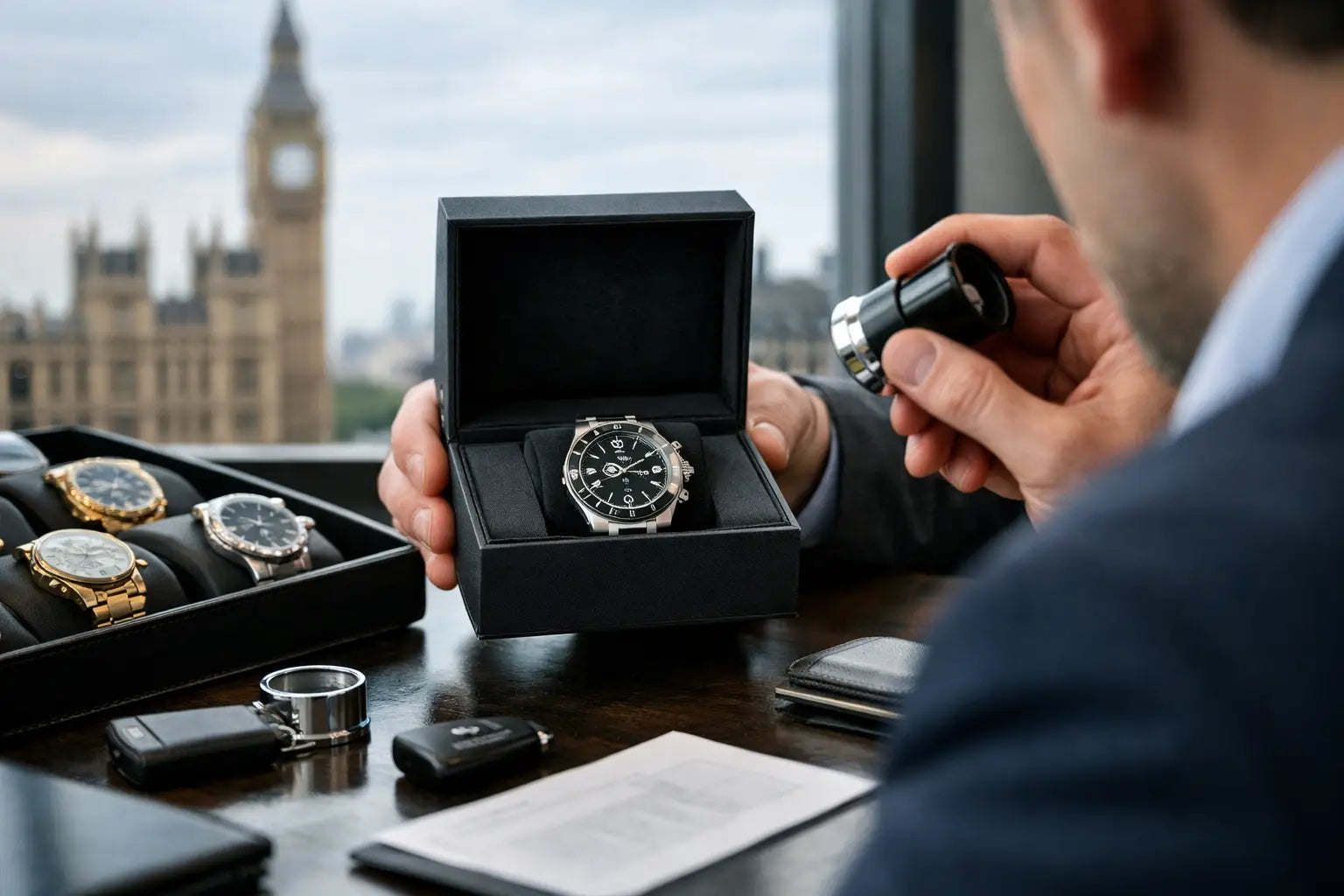
Meeting in person is often the cleanest route for a private transaction, provided it happens safely. Choose a reputable watch dealer, jeweller or authenticated watch service centre where the piece can be inspected before money changes hands. Do not meet in a car park, a station concourse or at a private address you cannot verify.
How to buy pre-owned watches safely: verify provenance
A serial number is not a magic shield. It can be altered, copied or attached to paperwork that belongs to another watch. Treat it as one part of a wider provenance check.
Ask what comes with the watch: original box, warranty card, purchase receipt, service documentation, spare links and any original accessories. A full set can strengthen confidence and resale value, but missing paperwork does not automatically mean the watch is illegitimate. Older watches are often separated from their original documents over decades. What matters is whether the seller has a coherent, credible account of ownership and whether the watch checks out physically.
Compare the reference number, dial configuration, bezel, bracelet, clasp and movement against known specifications for that model and production period. Luxury watches evolve in small but significant ways. Font spacing, hand shape, bracelet codes, engraving depth and the position of a date window can all expose an incorrect or assembled piece.
Be especially wary of words such as “custom”, “aftermarket” and “enhanced”. An aftermarket diamond bezel, replacement dial or non-original bracelet may be declared honestly, but it changes both the value and the character of the watch. It is not equivalent to an untouched factory specification. If originality matters to you, get every modification stated in writing before paying.
A database check for reported stolen watches is worthwhile, but it is not a complete answer. Records can be incomplete and a clear result does not authenticate the movement, dial or case. Use it as another layer, never the only layer.
Inspect the metal, movement and condition
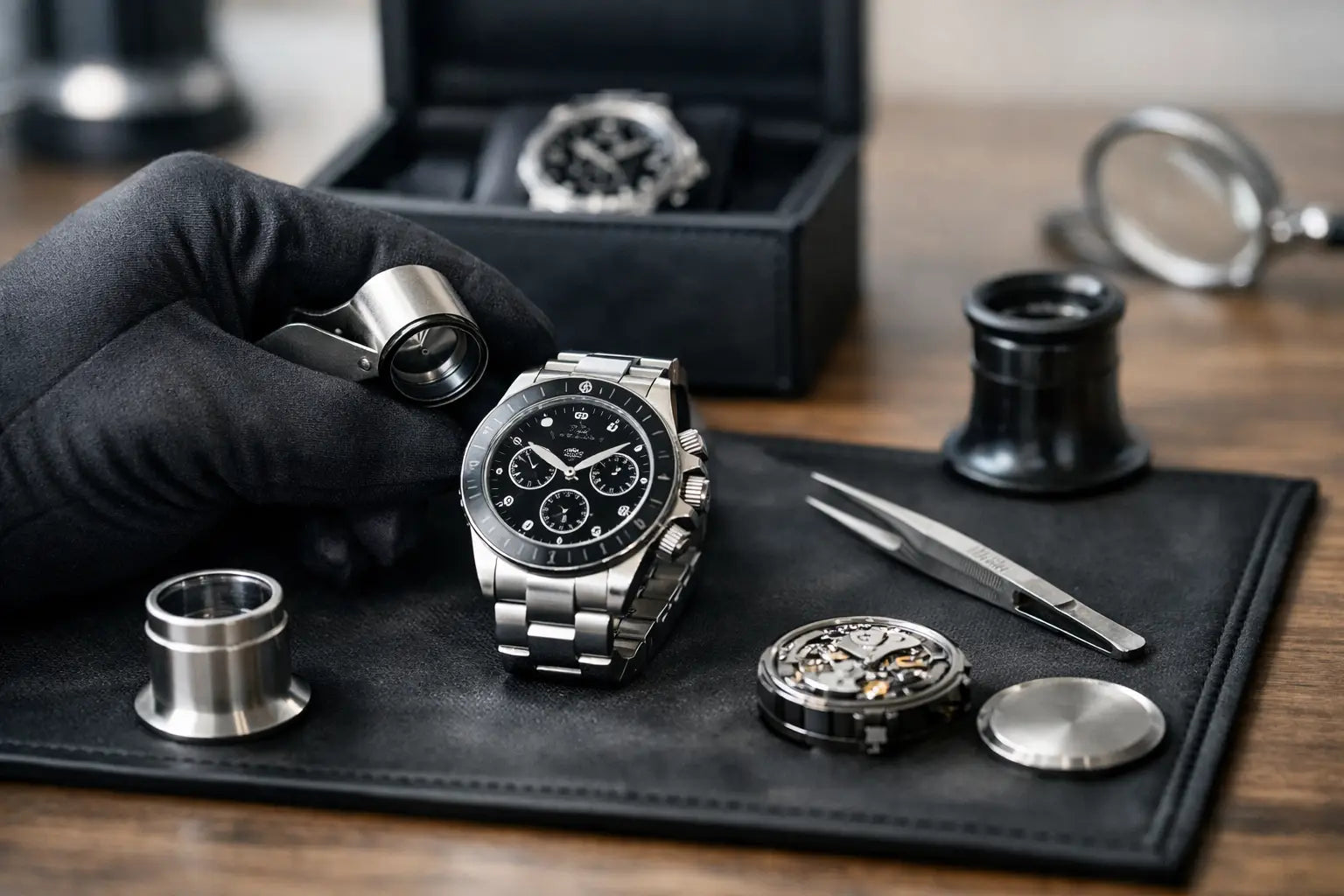
Photographs flatter watches. Light hides over-polishing, softened case edges, damaged crystal coatings and dial flaws. Ask for high-resolution images taken from several angles, including the case sides, lugs, clasp, bracelet stretch, crown, caseback and any engraving. For a chronograph, request footage of the pushers, reset action and sub-dials working.
When handling the watch, look for symmetry and sharpness. On many sought-after steel sports watches, the case profile and bezel definition are part of the appeal. Heavy polishing can remove metal and blur those lines. A watch may look shiny yet be materially diminished.
Check that the bracelet closes firmly, the crown screws or seats correctly where relevant, and the date changes cleanly. Listen for unusual rotor noise and feel for rough winding. These are not definitive diagnostic tests, but they can reveal obvious neglect. Water resistance should never be assumed simply because the watch was designed as a dive watch or sports model. Unless it has been pressure-tested recently, treat it as untested.
A service history has real value. Mechanical watches need maintenance, and a low purchase price can disappear quickly if the watch requires a full overhaul, replacement parts or water-damage repair. Ask who performed the service, when it was done and what work was completed. A vague claim that it was “recently serviced” means little without an invoice.
If the watch is expensive or the details do not line up perfectly, pay for an independent inspection. That is not paranoia. It is the cost of controlling the deal. A qualified watchmaker can assess movement condition, component originality and signs of tampering that photographs cannot show.
Know what the price is actually telling you
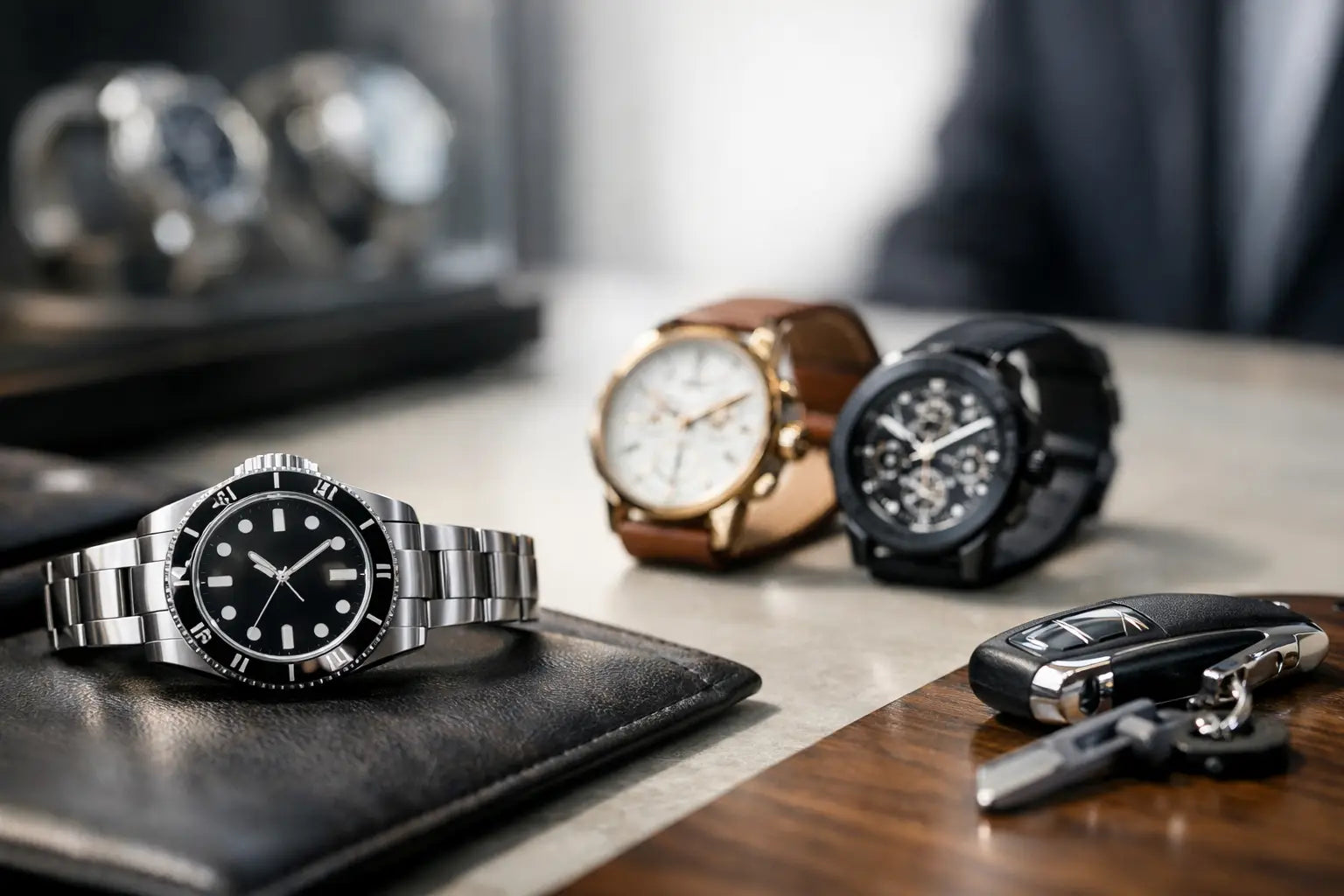
The pre-owned market has no single fixed price. Value changes with condition, provenance, configuration, completeness, service needs and demand. A steel chronograph with an original bracelet, sharp case and documented service history is not comparable with a heavily polished example missing links and paperwork.
Research recent realised prices, not just optimistic listing prices. Sellers can ask whatever they like; completed sales reveal where the market actually sits. Build in likely costs for insurance, authentication, servicing and replacement links or straps. This gives you a realistic all-in number rather than a fantasy bargain.
If a watch is dramatically below market value, assume there is a reason until proven otherwise. It could be stolen, incorrectly described, damaged, non-original or simply not real. The rare exception is not a buying strategy. Scarcity makes people careless, and careless buyers become easy targets.
Pay in a way that gives you leverage
For distance purchases, use a payment method with meaningful buyer protection and a clear transaction record. Avoid cryptocurrency, payment links from unknown sources, friends-and-family transfers and requests to split payment across multiple accounts. Those methods reduce your ability to challenge a problem later.
Read the dealer’s return terms before you pay, not after the parcel arrives. You need to know the inspection period, who covers return shipping, whether a refund is available if authenticity is disputed, and what condition the watch must be returned in. Keep screenshots of the original listing, the stated condition, all messages and the invoice.
For a face-to-face sale, confirm the final price, reference, serial details where appropriate, included accessories and condition in a written receipt. The receipt should identify both parties and the watch clearly. It is basic discipline, but it becomes vital if ownership is ever questioned.
Protect the watch once it is yours
A safe purchase does not end at checkout. Photograph the watch and its accessories as soon as it arrives, then insure it at a realistic replacement value. Keep the invoice, service papers and authentication records together. If you wear it regularly, avoid advertising your routine or leaving it visible in a car, gym locker or unattended coat.
Most of all, give yourself permission to walk away. The right watch will still feel right after questions, checks and a night’s sleep. A seller who respects the value of the piece will respect the process. Authority on the wrist starts with control in the purchase.